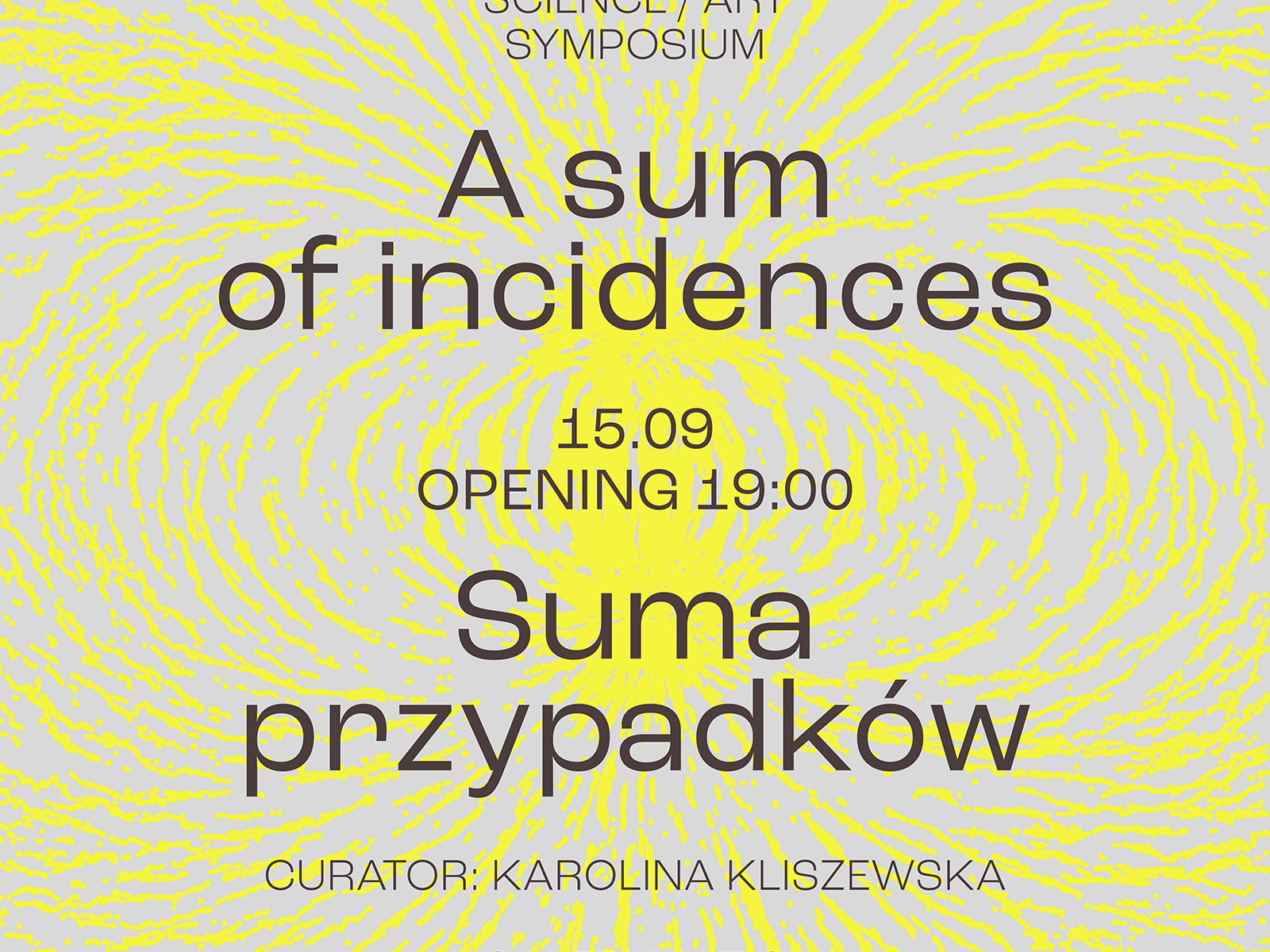
A SUM OF INCIDENCES
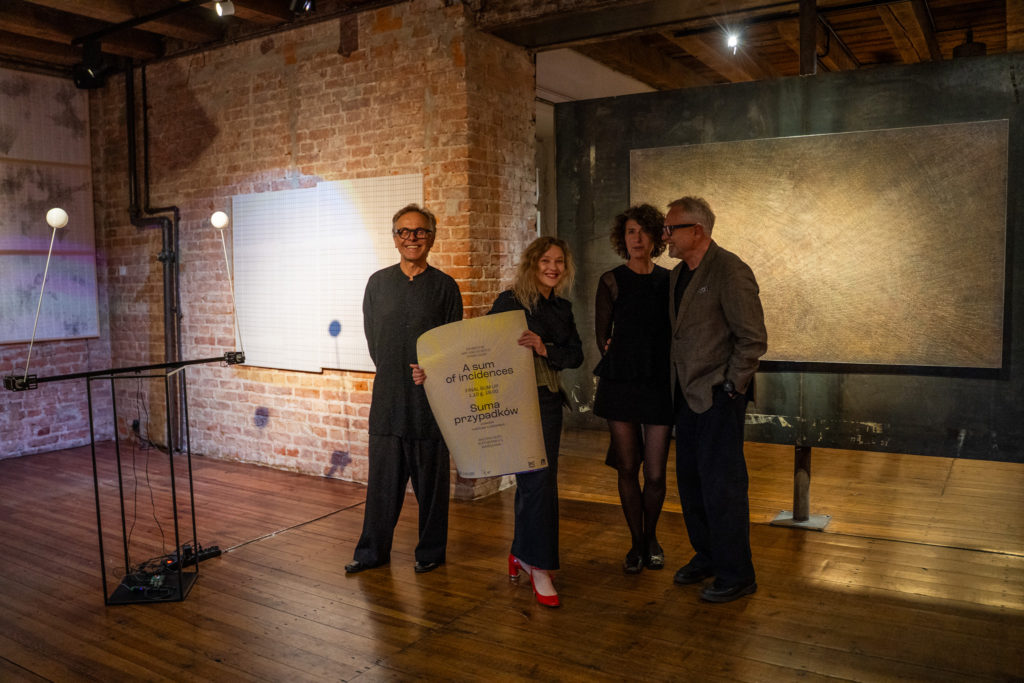
The main context for the exhibition is the Simons Programme on Twistor Theory and its Applications, taking place in Warsaw and bringing together an international community of mathematicians and physicists working on twistor theory. The initiative was developed in collaboration with Professor Maciej Dunajski of the University of Cambridge, art. curator Karolina Kliszewska, and Professor Wojciech Leder of the Academy of Fine Arts in Łódź as an artistic event accompanying the scientific programme. A Sum of Incidences creates a space for a genuine encounter between two communities—the artistic and the scientific—and for exploring geometry beyond the boundaries of their respective disciplines.
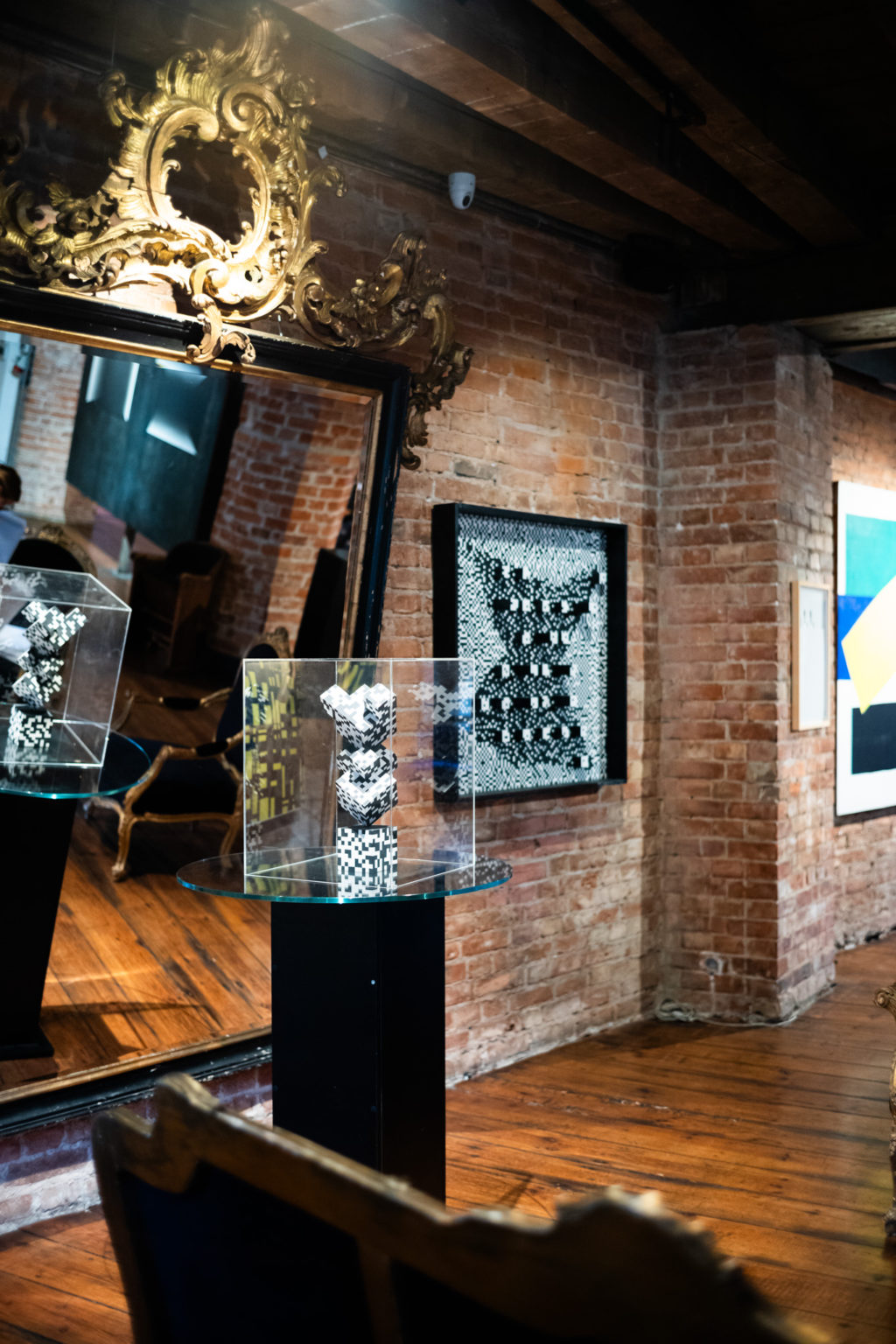
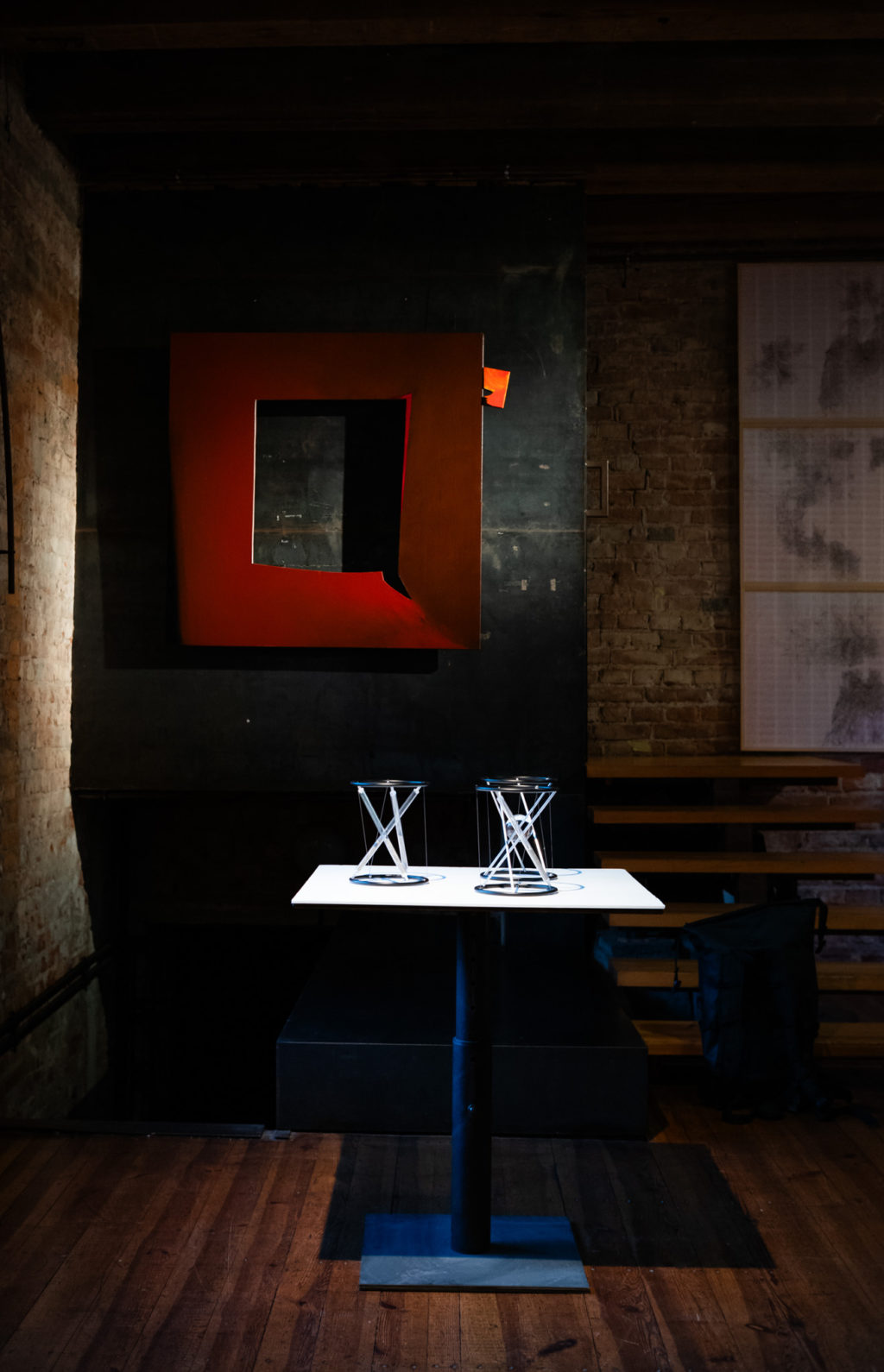
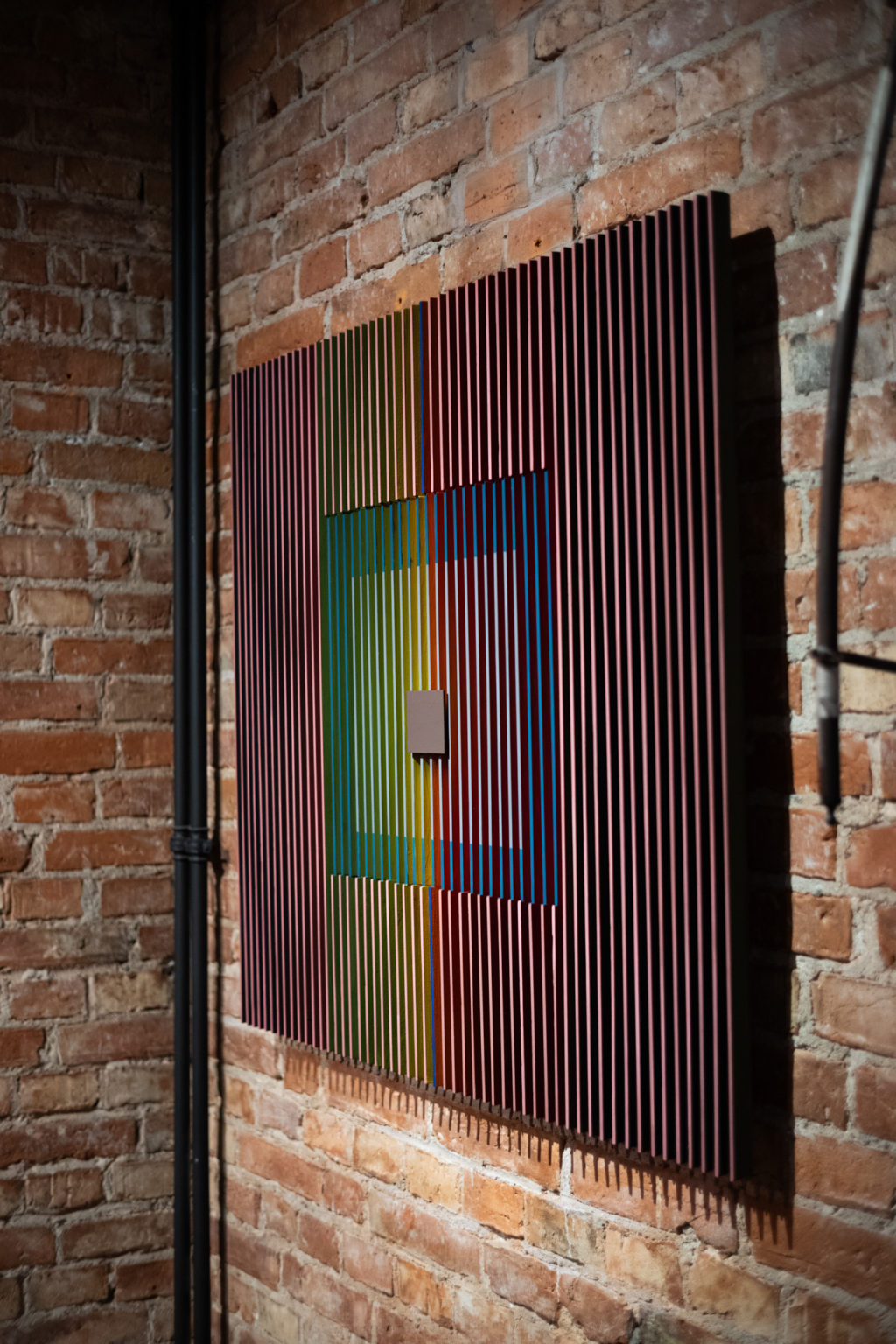
The presentation brings together works by leading figures of the Polish avant-garde and post-war conceptual art, alongside works by contemporary artists. It highlights various moments in which mathematical thinking permeates artistic practice — from the rigour of systems and combinatorics, through the investigation of space and perception, to chance, process, experimentation, and digital technologies. Maciej Aleksandrowicz — module, repetition, structure; Małgorzata Borek — structure, rhythm, transformation; Wiesław Bartkowski — algorithm, generativity; Jan Berdyszak — space, absence; Mateusz Dąbrowski — system, disruption; Stanisław Dróżdż — logic, language, infinity; Jerzy Kałucki — curvature, space; Koji Kamoji — reduction, elementary relation; Igor Kubik — perspective, construction of space; Wojciech Leder — the materiality of geometry; Magdalena Moskwa — measure, body, space; Andrzej Nowacki — rhythm, module, permutation; Jan Pamuła —combinatorics, digital structure; Jerzy Porębski — proportion, construction, spatial order; Weronika Anna Rosa — observed geometry, organicity; Henryk Stażewski — construction, relation; Ryszard Winiarski — mathematical system, rule. Art and mathematics are two systems for describing reality which, despite employing different languages, have for centuries met in concepts of space, proportion, relation, order, and infinity.
The exhibition takes geometry as its point of departure—one of the oldest branches of mathematics and, at the same time, a field particularly close to the visual arts. A point, line, plane, figure, division, symmetry, or spatial relation can function as the subject of a mathematical proof, but also as a fundamental tool for constructing an image. In twentieth- and twenty-first-century art, however, geometry ceases to serve solely as a compositional principle. It becomes a method for investigating reality, a system for organising chance, a tool for experimentation, and, at times, the very subject of the artwork.
The exhibition title deliberately draws on the ambiguity of the Polish word “przypadek”. It can denote an unpredictable event, a single example, but also a specific configuration of conditions. The English title A Sum of Incidences additionally introduces the concept of “incidence,” a term used in geometry to describe a relation between geometric objects, such as a point and a line. “Sum” thus becomes a collection of encounters: between order and randomness, rule and intuition, mathematical abstraction and the material experience of the artwork.
The Simons Programme on Twistor Theory and its Applications takes place from 23 August to 26 September 2026 at the Institute of Mathematics of the Polish Academy of Sciences in Warsaw. Organised by Professor Maciej Dunajski of the University of Cambridge and Wojciech Kryński of the Polish Academy of Sciences, the programme brings together researchers from leading institutions around the world to explore twistor theory—the geometric concept proposed by Roger Penrose in the 1960s, which reconceived the relationships between mathematics, geometry, and physics. The Warsaw gathering is in a particularly close dialogue with the conference Penrose at 95 and Twistors at 60, held immediately beforehand in Oxford (10–12 September), marking Penrose’s 95th birthday and six decades of the development of twistor theory. Professor Dunajski is a co-organiser of both events, while Penrose himself participates in both the Oxford programme and, online, the Warsaw programme.
The exhibition is organised by Cliché Gallery in collaboration with Galeria Nizio. The project is realised in cooperation with the Institute of Mathematics of the Polish Academy of Sciences and the Banach Center.
Curator: Karolina Kliszewska
Organisers: Cliché Gallery, Galeria Nizio
Partners: Banach Center, Institute of Mathematics of the Polish Academy of Sciences
Klonn Restaurant
Venue: Galeria Nizio, Inżynierska 3, Warsaw
Photos from the exhibition opening: Eliza Krakówka